
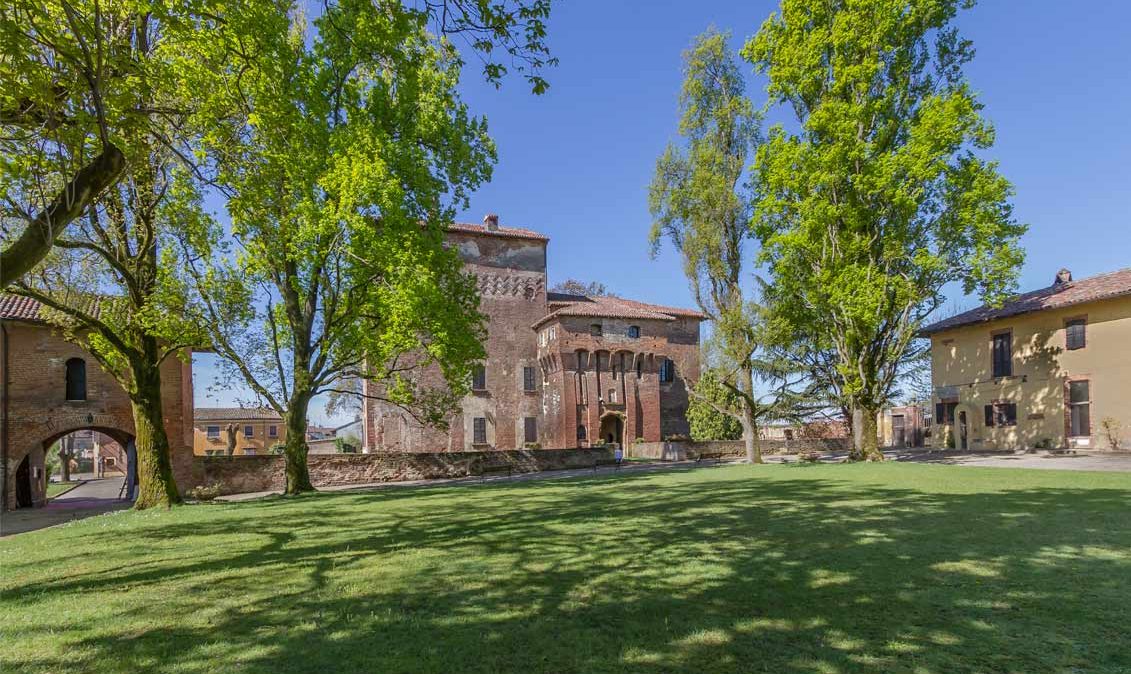
Introductory Panel
The term Privilege, inherited from Roman law, but modified in its meaning during the Middle Ages and then the modern age, means the concession, in favor of individuals or groups, of rules that guarantee an advantageous position compared to those who privilege is excluded.
The Privilege could be granted by whoever had the authority to grant rights, first and foremost, therefore, by the emperor or the pope, but also by whoever exercised authority over a specific territory.
The Ducal Privilege, therefore, belonged to a duke, in this case the Duke of Milan, who had the necessary authority over his territories.
It is a document of the highest authority, drawn up with appropriate forms and procedures.
Written on a parchment, it is produced by the Ducal Chancellery, it begins with the Heading, containing all the feudal titles pertaining to the Duke of Milan, which constitutes the initial formula of the Protocol, which is followed by the Content and then the Escatocol, i.e. the final formula, at the end of which is placed the Date, indicating the place and day on which the document is drawn up.
The writing is Cancelleresque, the language is usually Latin and at the bottom right is the name of the secretary, also in Latin.
The duke’s signature, also in Latin, is usually at the bottom left. The document is sealed by a seal, usually adherent, made of sealing wax and applied to the parchment itself. Otherwise, the Seal could be Pendant, also made of sealing wax and secured to the parchment with a ribbon that passed through a hole made in the lower part of the parchment itself.